
It’s international facilitation week!

Updated: Mar 5
2-8 February 2026
If you’ve got smart people in the room but decisions still feel hard, this is for you

We see this all the time.
Projects full of capable people. Plenty of expertise. Strong intent.
And yet conversations loop, meetings fill calendars and progress feels slower than it should.
That’s not a capability problem. It’s an alignment problem.
It’s International Facilitation Week and it’s a good moment to talk about the role facilitation plays in helping teams turn diverse views into shared direction, especially when the work is complex and the stakes are high.
At Mara Consulting, we use facilitation to create the conditions where people can think clearly together, work through tension and make decisions they can actually move forward with.
Here are our top tips we rely on when the stakes are high. 👇👇
Start by designing the conversation
If you want better outcomes, don’t leave the conversation to chance.
Before anyone walks into a room, be clear on why you’re there. What needs to be understood? What needs to be tested? What must be decided?
That clarity comes from good planning.
When the purpose and process are clear, people show up differently. Conversations stay focused and time together actually leads somewhere.

2. Use methods that engage people, not just agendas
Facilitation is not about chairing a meeting well.
It’s about using the right methods to help people think, contribute and engage.
That might mean visual tools, structured exercises, gamification or hands-on activities that get people out of passive listening mode and into active problem-solving.
Well designed methods help surface different perspectives, level the playing field in the room and keep energy high, particularly when topics are complex or emotionally charged.
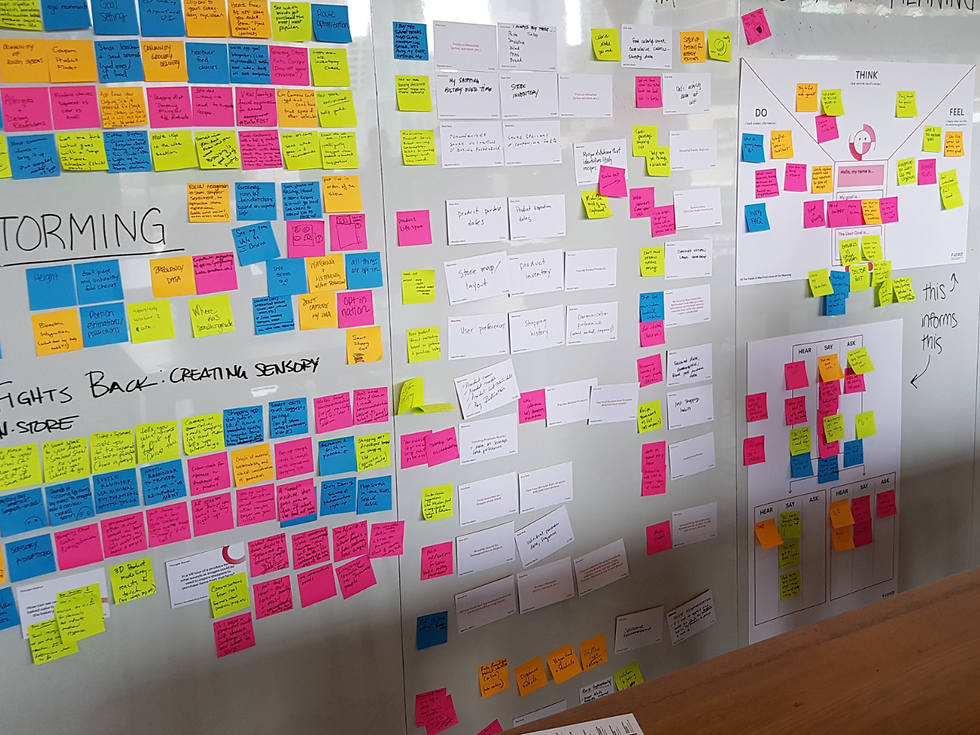
Give people space to think before asking them to decide
One of the fastest ways to stall a project is to blur discussion and decision-making.
Good facilitation separates sense-making from choice. It gives teams room to explore issues, test assumptions and understand trade-offs before asking them to land on a direction.
When people have time to think, decisions come more easily and stick for longer.
Use methods that engage people, not just agendas
Facilitation is not about chairing a meeting well.
It’s about using the right methods to help people think, contribute and engage.
That might mean visual tools, structured exercises, gamification or hands-on activities that get people out of passive listening mode and into active problem-solving.
Well-designed methods help surface different perspectives, level the playing field in the room and keep energy high, particularly when topics are complex or emotionally charged.

5. Don’t work around tension, work through it
If something feels uncomfortable in the room, there’s usually a reason.
Unspoken concerns slow projects down.
They don’t disappear, they just resurface later, often when it’s harder to deal with them.
Facilitation creates a safe, structured way to surface different views early, while there’s still time to work through them constructively.
Naming tension doesn’t create conflict. It prevents it from becoming entrenched.
Hold the process so the group can focus on the work
Every project has competing perspectives, strong personalities and power dynamics. That’s normal.
An impartial facilitator holds the process so everyone else can focus on the substance. It balances voices, keeps conversations on track and helps the group stay focused on outcomes rather than individuals.
Often, that neutrality is what allows the most honest and productive conversations to happen.

Treat time like the project cost it is
Time is one of the biggest hidden risks in projects.
Strong facilitation brings discipline to how time is used. Conversations are purposeful.
Discussions stay focused. Sessions end with clarity about what was decided, what still needs work and what happens next.
People leave knowing their time mattered.

8. See conflict as information, not disruption
Disagreement isn’t a sign that something’s gone wrong. It’s often a sign that something important is at stake.
Facilitation helps slow conversations down when emotions run high and shifts the focus from positions to understanding. When handled well, conflict leads to better decisions, not delays.
This is especially critical in projects involving change, impact or long timeframes.
Make sure workshops lead to action
Facilitation only matters if it leads to something.
Workshops are not the end point. They’re a way to build shared understanding, align expectations and create ownership.
Every session should end with clear next steps, responsibilities and timeframes.
Why invest in professional facilitator?
Facilitation doesn’t seek the spotlight. But its impact is easy to see.

Better conversations. Clearer decisions. Projects that keep moving.
Our approach is grounded in professional facilitation practice and informed by global standards through our involvement with the International Association of Facilitators, but shaped most of all by real-world experience in complex, high-pressure environments.
Want your project conversations to move things forward?
If you’re dealing with complexity, competing views or decisions that feel stuck, facilitation can help.
Get in touch to talk about how Mara Consulting can support your next workshop, project milestone or decision point.
Author.
Kelly Lofberg is an engagement and communications professional, who specialises in complex and issues rich environments. Bringing innovative ways to solve problems is her jam. Sometimes Kel brings LEGO® too.

About Mara
Mara Consulting is a Newcastle based communications and stakeholder engagement consultancy specialising in planning approvals, community consultation, social impact assessment (SIA) and strategic communications for infrastructure, renewable energy and property development projects across NSW.


Comments